Thursday, December 22, 2016

"Shopping" for lumber

 Written by Logan Sander, December 3, 2016 (edited by Laura)
Shopping for lumber is a little different when the nearest hardware store is two hours away and the final 20 minutes of the trip requires that we haul in our purchases by hand. Despite this, we still have many needs for processed lumber, from repairing the stairs that ascend the hill towards the field station to building the planter beds and other nursery infrastructure. To solve this problem (and because it’s what they’ve always done), people in Pitikele make their own boards from the trees in their homegardens and around their homes. In particular, whenever rot- resistant boards are needed for outdoor projects local people use kitul, or fishtail palm. Palms are an extremely important group of plants throughout the tropics, and in particular the kitul palm is both economically important and a keystone of Pitikele cultural life (more on the uses of kitul palms in a later post).            
Tillekaratne high in a tree after the kitul palm was hung up
Somaratne and Tillekaratne located several older kitul palms on the property and together we set about felling them. These trees had already flowered and were in various stages of mortality. The first tree was very large and was felled with a 2 man cross-cut saw. After releasing this tree from the stump, it fell directly into another large tree and a tangle of vines and branches – not the desired outcome. Our friends, however, were not phased – Tillekaratne promptly grabbed his axe and climbed the tree ours had fallen into. At this point, concerned for his safety, we tried all manner of communication (mostly non-verbal) to get him to come down to safety. He and Somaratne expressed a total lack of concern, and we eventually calmed down and let them proceed with their work. Swinging the axe with one arm and hanging on with the other, he deftly freed the kitul palm while managing to stay in the other tree... not something a forester sees every day in the woods! Once we were all back on the ground, we bucked the palm into the lengths we needed with the crosscut (about 8’) and Tillekaratne made a series of splits with the axe running the length of each segment. The core of a kitul palm is a wet, sweet- smelling pith: very soft and mushy. The outer wood, however, is extremely hard and rot resistant. With the fissures in place, Tillekaratne would twist his axe 90* (something that would break the thin strip of wood through the eye of the axes we’re familiar with in the States) while we jabbed and pried with the digging bar and poles, eventually splitting the 8’ segments into a several boards. The final step was to chop away the mushy pith with a mattock and Viola! We had twenty finished boards. These boards were hauled through the forest down to the nearby river, bound together by vines, and floated back to our nursery. Every part of this process was hard work, but our reward was valuable rot-resistant wood and a fascinating cultural learning experience. We turned two more palms into boards over those couple of days (with all five of us working) and that gave us enough lumber for our nursery beds and new stairs to the field station.
Logan and Blair bucking the kitul logs with a crosscut saw
Preventing the saw-blade from pinching while cutting to length
 
Splitting the bucked logs to make boards
A straight lengthwise split then twist & pry
 
Somaratne chopping off the soft pith
Laura chopping off the soft pith
 
Cleaning up freshly cut boards with various hand tools
 
Hauling the boards back to the nursery in bundles
 
River walking makes for easy hauling!
Tillekaratne's surprisingly strong son Tarindu also helped us out
  Several weeks later, we devised another small project for which we went “shopping.” We wanted to bring the overflow water from the field station’s water tank down to our nursery, so we could easily fill our watering can. For this, Tillekaratne suggested we use some of the larger bamboo growing along the riverbank. These seem to be clumping bamboo varieties, with a diameter of 4-6” and a height in excess of 40 feet. Similar to the kitul wood, we split the canes of bamboo with an axe and pehija (small hooked knife) and twisted ninety-degrees with the tool to split the stems along a line. In this case, we didn’t need more than two splits per cane, as we wanted to end up with open-faced irrigation “pipes”. Next, the solid nodes of each half of the cane were chipped out with the backside of the pehija blade. Within minutes we had several 20+ foot water pipes - much easier than preparing the kitul wood!    
Carrying bamboo canes down the Pitikele road
 
Processing the bamboo canes
Creating lumber out of trees from the land we live on is a first for me. In my work as a forester, I’ve decided which trees will be cut and sent to a mill. However, I’ve never cut those same trees, and I’ve almost certainly never purchased the products that those trees are used to create. Here in Pitikele, we’ve taken a task through to completion - from selecting trees to processing them to their final use in our nursery - much more satisfying than a trip to Home Depot.                

Sunday, December 11, 2016

The beginnings of a homegarden: construction of a nursery

Entry written by Logan Sander
After a few weeks of getting oriented and familiarized with our Sri Lankan village life, we began work on our homegarden plant nursery. For us, the nursery will be one of our primary work sites, a place where we can grow, multiply and nurture along the plants that will come to make up our homegarden, tea fields and any other forestry or agricultural project we undertake. Under the guidance of Professors Ashton, Gunitelleke, Singhakumara and our caretaker Somaratne, we selected a site for the nursery near the field station on a flat alluvial terrace next to the stream. In this location we have ready access to water and any construction materials we might need. In many ways the proper functioning of a nursery is as much a social consideration as an ecological one – we expect to visit the nursery several times a day to check on and water plants. It’s important that the nursery be conveniently located, otherwise it’s all too easy for the spontaneous nature of our day-to-day lives here to lead to neglecting the plants. Forgetting to water germinating seeds on a single rainless day could result in their demise (admittedly, rainless days seem rare here in the “rainforest”).             After a rough delineation of the site, we set about clearing the area. Somaratne led the way, showing us how to use the local machete-equivalents (pehiyas and katas) to cut away small trees and ferns. We chopped and raked roots with the idella, a large hoe-like tool used locally for everything from mixing cement to maintaining rice paddies. While crashing around in the bushes we found a small mine, which pretty much consists of a vertical hole in the ground, about 2 meters square. This province (Sabaragumara) is renowned for the gems buried beneath the shallow soils. Several streets in the provincial capital of Ratnapura (“City of Gems” in Sanskrit) are filled with small-scale gem miners and merchants. We also came across a few polybags scattered amongst the leaf litter – apparently ours isn’t the first nursery to be located here! In terms of light management, we cut a few large branches of adjacent trees
Logan axing a tree to provide more light to the seedlings
that blocked light to the ground where our plants will be located. Our closest neighbor, Tillekaratne, and his climbing skills came in handy for this. Within seconds of deciding what to cut he had sprung up the tree, cut the limb, and slid down the trunk like it was a fireman’s pole. At ground level, we retained most of the seedlings of the late-successional trees (mostly Dipterocarps – a subject for a later posting). These seedlings won’t interfere much with light reaching our nursery beds, but will become the future forest when the nursery is eventually abandoned (hopefully after many years of good use!). Ultimately, we ended up with a 15m x 20m clearing that permits at least half of the sunlight to reach our plants. If we need to, it will be easy to expand the nursery into the secondary forest. 


Tillekaratne climbing a tree to cut branches
 
Next, to build the nursery beds, we needed some wooden boards. The plants in our nursery will be grown in polybags – 4-6” diameter, 8-10” long tubes of black plastic sealed at one end with a few drainage holes poked into the bottom. As a result, our nursery beds simply provide a structure to hold the polybags upright and make it a little easier to organize our inventory. We decided on a rough size (8-10’ long, 4’ wide – for ease of watering/weeding) and set off into our forest to cut two large kitul palms to make into wooden boards (more on this in the next post: “’Shopping’ for lumber”). After moving the finished boards to the nursery we quickly built the beds: two short boards, two long boards, and 10-20 handcrafted wooden stakes to hold them in place. Within a few hours, and after some minor work modifying a nearby hose, we had 10 nursery beds complete with a central water spigot!           

Constructing the nursery has been a highlight of our time here so far. This modest project represents one of the more tangible pieces of work at this stage in our experience, a welcome change from the endless ups and downs of learning Sinhala and adapting to a new culture. Each day was filled with lessons and laughter from our local teachers, the rise and fall of the sun, evening rain showers, the hooting of our neighborhood monkey troop, and the intermittent excitement of a snake, a gaggle of foraging birds, or the sighting of a wild orchid. We purchased very few materials, instead relying on the resourcefulness of our local friends and the vast storehouse of natural materials from the land. Most of the work was done with commonplace tools and was of simple, common sense design. Any anxiety we felt was self-imposed: the stresses of industrial society seemed distant and far away - no blaring horns or diesel exhaust in Pitikele! Evenings were spent practicing our language skills (or lack of skill) with our friends and reading under the spacious veranda.          
Beginning planter bed construction
Pounding stakes for bed construction
   
Gathering soil adjacent to secondary forest


soil site with a screen for sorting out rocks
While we are satisfied with the start we have made, our work is only beginning. Thinking ahead, I can imagine several larger efforts and hundreds of smaller tasks to accomplish before we have a functioning, educational homegarden.   
Hauling soil to the nursery
To give an idea of how long all of this took, here’s an approximate time summary (usually with at least 3-4 people working): 
-Clearing the site: 1 day
 -Cutting Kitul palms and processing them into boards: 1.5 days  
-Building the nursery beds, bringing water to the site: 0.5 days 
-Gathering, processing, mixing and hauling soil and sand: 2 days 

After mixing the rich organic soil with river sand, we planted seedlings
Blair and Tillekratane after a long day of work
 

Tuesday, December 6, 2016

My first broken bone

A morning descent to the river for a swim on November 20th went awry when I stepped down onto a root and slipped sideways. My left pinky finger got caught on something and I heard a crack... After a moment of shock, I moved down into the river to keep the hand cool while I assessed how bad it was. (Silver lining side note: As I sat there, a European otter swam by about 4' in front of me and stuck his head out to look at me before continuing on!) After a short time, Logan and I decided I needed an X-ray. At that time, I was hoping it wasn't broken, but expecting it probably was. We "zipped" to a surgical hospital in Colombo, which took about 5 hours with a private driver... Unfortunately the old Jeep that we started the journey in wasn't licensed to drive on the freeway (that route is more like 3.5 hours). Although there are cities that could have done an X-ray closer, it didn't seem urgent and we suspected the best doctors are probably in Colombo. Plus, Dr. Singhakumara was kind enough to navigate the hospital system, arrange our accommodations, and involve his daughter, who has just finished medical school and is starting her internship. We were escorted through X-rays, a doctor's consultation, and a surgical consultation at a private hospital all without waiting and the whole visit cost about $15. They even gave me fresh squeezed orange juice and an egg salad sandwich with the crust cut off 😉 So, I have a spiral fracture in my 5th metacarpal (I broke the bone in my hand under my left pinky).
X-ray showing the spiral fracture
The surgeon there gave me a choice between a slow non-surgical recovery and a fast surgical recovery. Thinking a second opinion would be helpful, the next morning the Singhakumaras made some *amazingly connected* calls and we were able to take my X-rays to the top surgeon in Sri Lanka (he has performed surgery for the country's President). This surgeon said with absolute certainty that surgery was not necessary and that my hand would heal fine on its own. What a relief! Our family doctor in the states also looked at the X-rays and agreed. So, since that visit, I've been back to Colombo twice for more X-rays, a cast, and follow-up and it sounds like I'll have to make at least two more trips. Everything is healing well and although my activities have been severely limited, I'm still keeping busy and in high spirits. It sounds like I should be out of the cast around New Year's.
My half plaster cast
Getting orchid plants from our neighbor with cast in tow
 

Wednesday, November 9, 2016

Distinguished Professors & Nursery Beginnings!

About two weeks ago Logan and Blair’s former professor,    
"Botanizing" with Professors Singhakumara, Ashton, & Ediriweera
Dr. Mark Ashton, came for a visit. With him, he brought four prominent Sri Lankan professors of ecology and several students, as well as several local villagers who have been involved in their conservation projects and research over the years. Our new home bustled with activity and we set out into the forest to learn and get acquainted. We were given a crash course by Sri Lanka’s preeminent forest ecologists covering a huge variety of plants, local ecosytems and culture. We toured home gardens, climbed a few small mountains, and made a rapid descent down an overgrown forest path in a monsoon- like downpour.
               
Me & Logan atop Moulawela mountain in the Sinharaja Forest Reserve with a great rainforest view
 
This forest receives around 20 feet of rain annually!
A Soaked trio: Professors Ashton, Ediriweera, & Nimal Gunatilleke
Professor Ashton also gave us a clearer idea of the project he would like us to work on while we are here... we will collect and document information about the cultivation of home garden plant species, build and maintain a plant nursery, and design and install a home garden for the field station complete with labels and ethnobotanical information, so the site can be used for education about home garden techniques and implementation. Our garden will likely include many of the common fruit trees here like coconut, papaya, guava, avocado, and jack. We’ll also plant bananas, pineapples, herbs, peppers, and lots of pretty flowers, but that’s just mentioning a very few of the hundreds of plants that the villagers here cultivate. 
  
In order to be successful with this project, we have begun learning Sinhala (the local language), which if we become proficient, will give us the opportunity to directly get to know and talk to villagers about their lives and gardens. We will also be hiring a translator to help us gain more specific information, but after Peace Corps, Logan and I have realized that our own language acquisition is really key to integration and understanding the culture. Since my last post, we’ve learned many more words and have begun making sentences and asking basic questions. We are happy with our progress, but are also reminded of just how helpless and inept we can feel without common language. Even though we are waiting for our language to get better and for our translator to be available, we’ve managed to visit a couple of homes and tour their gardens. This got us started recognizing plants and learning their Sinhala names. Our neighbors in Pitakele have been wonderful hosts and patient teachers of both the Sinahala language and the uses of the plants they cultivate.
Meanwhile, we established a site for the nursery and have cleared the area. We had some lessons on how to use the local tools for clearning and chopping (a sort of hooked-machete and a hoe-like mattock) and went to work. We also took a trip to the “local” hardware store (~2 hours walking/busing to our closest town) and bought some tools and supplies to get started. Next up, we’ll help cut down a palm tree to make planks that will hold up our little seedlings and start meeting more villagers. Overall, we’re in awe of the beauty of this spectacular place, have adapted well to the climate, culture, and delicious food and are very excited to about the work ahead on our nursery and home garden.                                      
 
BEFORE: the area to be cleared for our nursery
AFTER: cleared nursery area (same perspective as above
Someratane and Logan clear brush with a hooked knife
Laura uses an "idella" to clear vegetation

Monday, October 24, 2016

Our First Week in Tropical Paradise!

We were treated to a spectacularly easy and comfortable arrival both into the country and to our home site! A professor that we will be working with while here picked us up at the airport at an unreasonable 1:00 am and transported us to a comfortable bed and breakfast. The next day, he brought us around Colombo, helping us get set up for our time in Sri Lanka, then drove us the 4-hour journey to our now home in a comfortable air conditioned van. We had the royal treatment and are so thankful for the easy transition.
 
The field station (our home) is very nicely positioned tucked onto a hillside overlooking the rainforest


Our home (the field station) is very comfortable with everything we need. It is tucked up on a hill at the end of an intermittently paved dirt road (also known as Pitakele village) amongst the ferns and orchids.  
40 minute walk to the tiny town of Kuduwa
We have a fantastic cook/caretaker who looks after the house and makes us three Sri Lankan meals everyday, usually including at least rice, vegetables, coconut and curry. 
We also had the good fortune of sharing the house for a few days with a Sri Lankan researcher who toured us around the Sinharaja Forest Reserve and helped us understand the culture a little better. He speaks English and also helped us get started learning Sinhala (the local language). I’ve now memorized the alphabet and am reading like a first grader (although I still don’t know what the words mean). I’m probably up to about 50 words so far.   
Logan, Laura, Champika, & Blair
Really though, the natural world is the main attraction here...
  While swinging in a hammock on our sizeable veranda, I daily witness many
tropical birds, monkeys, wild chickens, lizards, and of course a gorgeous panorama of tropical trees and plants. While we have had surprisingly less rain than we expected, this is also an excellent place to enjoy the sound and smell of clean water falling from the sky.
The weather and environment is much more comfortable than we expected as well. While it is of course humid, it seems less humid than DC in the summer... and the temperature mostly stays comfortable. The evening temperature is perfect for sleeping and the mosquitos are shockingly absent... In many tropical places, we would sweat without moving around or doing anything. Here, we are lucky that this is not the case; we get sweaty only when we are active!  
Although we have a shower at home, we usually choose to indulge in a cool swim at the head of our exceptionally clean river to rinse away the day’s heat. When the current is right, we stand under the waterfall for a massage as well!  
Our private swimming area complete with sandy beach and waterfalls!
Our lush panoramic view from the veranda, where birds and monkeys abound
This week, Logan and Blair’s former professor, who is a leader of the Sri Lankan organization hosting us, will arrive to spend a week better acquainting us with what our next 6-8 months will look like and the projects we’ll be working on.
Mama & baby purple-faced langurs visible from the veranda
We've seen two Vine Snakes (non-venomous) at Sinharaja
A Rat Snake (non-venomous) at Sinharaja high in a tree
Hibiscus Flowers are popular in home gardens
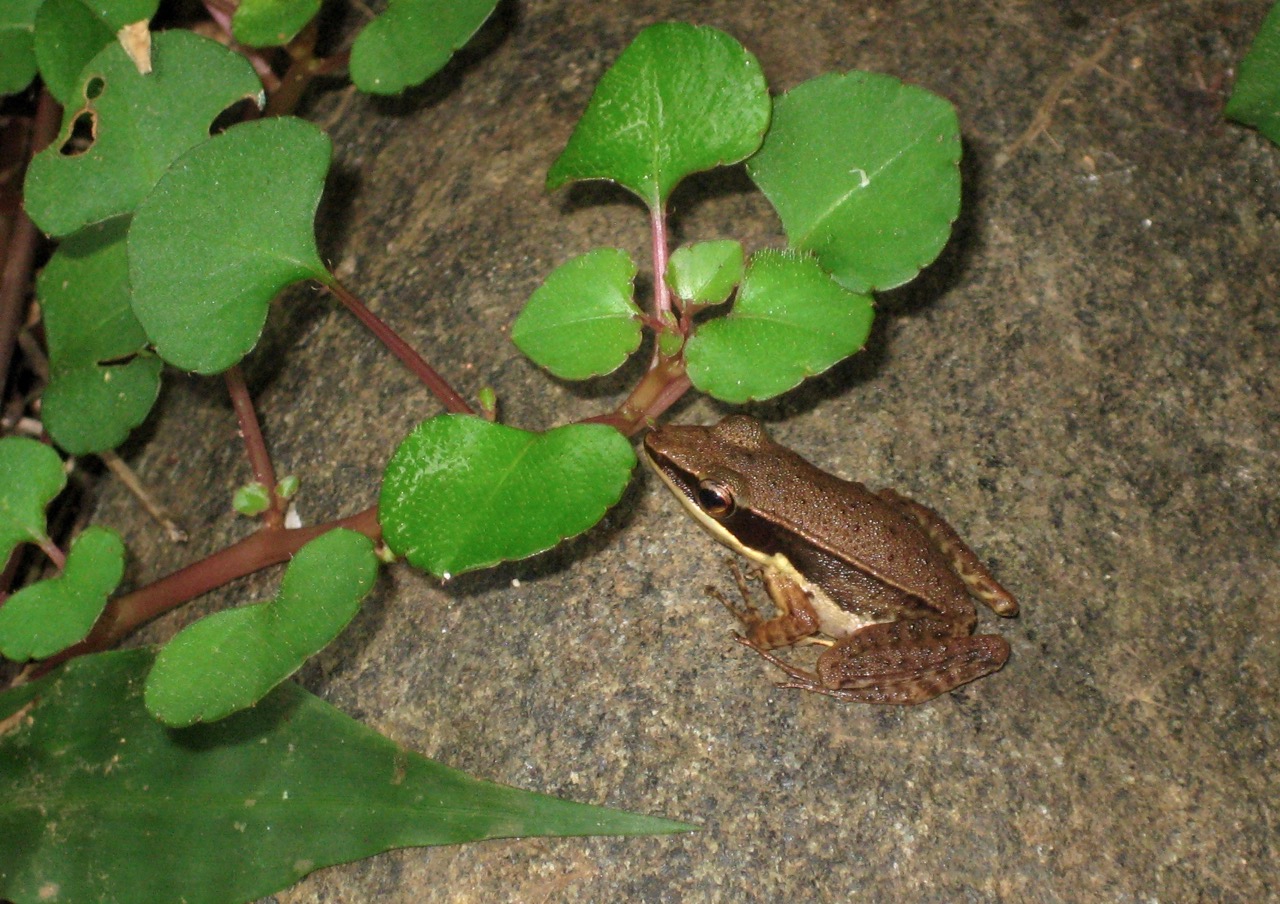
A tiny frog I spotted on a rock near the water
Water Lily is the National Flower of Sri Lanka 
These insect-eating pitcher plants grow here like weeds!
   
Ceylon jungle Fowl (ancestor of chickens) often visit us
Orchids grow all around our house

Thursday, October 13, 2016

A very exciting year! Marriage... House... Sri Lanka!


On June 9th, 2016 at the Seattle Municipal Courthouse, Logan and I were officially joined in matrimony. We had a beautiful short ceremony with our own vows in the presence of one of my sisters and Logan's brother.


In order to include our families and our many friends all over the country and world without having them fly to meet us, we decided to ask that people who would like to contribute and help us celebrate this wonderful time in our lives instead make a physical page that we could include in a book I created.  We have received many beautiful and thoughtful pages already and are so thankful to all those that have contributed in this way and through our various celebrations and website. For those of you that would still like to send us a page, please submit your address via this link so we can send you a page to complete.  Once all the pages are collected, we'll bound the book with a ribbon on the left.


Our Wedding Book

 After the wedding, we got to work on building our little house... We bought the trailer in the spring and did a lot of research and some forestry work at that time. We really got started building in early August when we started the framing. From there, we spent all day everyday building! We often worked 10-12 hours a day because we knew we needed to get it weathered in and ready for the Pacific Northwest winter (rain). We were actually lucky and the rains barely affected us during the building process! After it all, we think she's ready - all the exterior wood is cedar with environmentally friendly wood preservatives called "Eco Wood Treatment" and "Seal Once." Our windows and door are all double-paned and reclaimed - all flashed in multiple ways to send water away from the house. The roof is galvanized steel with hidden fasteners. The roof is also vented, the whole house is caulked and we've got our wonderful friends looking after her :) The box on the tongue of the house is for storage. The interior has a sleeping loft and a storage loft built in, but although we have the interior space all planned out, that is all that has been done so far inside. She took her "first steps" last week less than a mile over some rough terrain with no problem at all! Now, she's got her wheels off and is sitting pretty for the winter... SO MANY Thanks to all the amazing people that have helped us along the way - we've had many people contribute materials, labor, moral support and tons of building expertise. We don't know how we would have done it without you!

Our completed tiny house exterior

The back side
The front side has the most windows, so we can point that side where we want solar gain (or not)!
Test firing our tiny wood stove made for sailboats! We're going to be perfectly toasty when we get this installed!
She came a LONG way in 2 months! There were SO many steps and SO much learning...
 
Even though we are very excited about finishing our tiny abode, we are taking a hiatus from building to experience another extraordinary adventure!

.... Here's where we'll be living for the next 8 months!

Sinharaja Forest Reserve in Sri Lanka
Why Sri Lanka - you may be wondering...

This summer, Logan and I (and a friend of ours - Blair) accepted post-graduate fellowship positions through Yale to get a couple of projects started at a research field station adjacent to the Sinharaja National Forest Reserve, where we will also be living. Their professor has been working there for over 30 years and has developed the station, the projects, and the funding. The projects will be to start a native tree arboretum and to research, design, and plant a traditional home garden demonstration. The idea of these projects is to have a site for researchers, politicians, etc. to visit that will help them better understand the plants and growing methods of the area. Everything will be labeled and there will be resources in English to help people learn. The home garden is interesting because people there have been growing them for thousands of years and it is important to try to glean and document the extensive knowledge that they have about what plants grow together, how to propagate them, what they are used for, etc. So, we don't know how much we'll get done, but I suspect we'll be able to build a nursery and collect and start propagating some plants, get the land cleared for planting, do interviews and work on design. The Sinharaja National Forest Reserve is a UNESCO World Heritage site - the last large virgin forest in the country. There is a ton of wildlife including monkeys, elephants, leopards, boar, lots of tropical birds and amphibians and only 25 households in the nearby village. The wildlife may actually outnumber the people here! ...not to mention the plants... There is no internet out there - we'll have to travel 45 minutes to use it in a nearby town... We'll have a phone, but it's funny to think we will be even more remote than when we were in Peace Corps! Still, I'll make sure to get some blog posts out from time to time when we do make it in to the 'big town.' We will have a particularly unique experience in Sri Lanka being so remote... Sri Lanka has a population of over 20 million people and is only as big as the state of West Virginia! So, as you can imagine, the city will be a very different environment. Additionally, the people where we will live will primarily be Sinhalese (the most populous ethnic group in Sri Lanka) and Buddhist. We are very excited to experience and be immersed in another new culture. We will attempt to learn as much Sinhala (language) as we can because although people in the city speak English, we have heard that it is very uncommon for the people of the village... and we leave Saturday!  It's been a whirlwind year for us, but while it's been busy - we couldn't be happier!

Sinharaja is the country's last large virgin tropical rainforest
Purple-faced Langur
Tropical birds abound!

We love hearing from everyone, so please send us messages and photos :) Love and hugs from Washington and soon from the other side of the world!